Saturday, 10 October 2015

Sweet potato dog chew

Ingredients:


  • 1 Large Sweet Potato, washed & dried


Optional Equipment:
Food dehydrator


Instructions:

  1. Preheat oven to 250° F
  2. Line a baking sheet with parchment paper.
  3. Cut off one side of the sweet potato lengthwise, as close to the edge as possible. Cutting the side of the potato first allows you to then turn the potato onto this flat surface that you have just created. Having a stable area to rest the potato will make it easier to cut the potato into slices. Don't discard that first piece, it comes out just as yummy as the rest!
  4. Cut the rest of the potato into 1/3" slices, no smaller than 1/4".
  5. Place them on the prepared baking sheet.
  6. Bake for 3 hours, turning half way through.
  7. Cool completely on a wire rack.

Storing - Although these treats are dried, you will want to keep them in the refrigerator for up to 3 weeks. You can freeze them for up to 4 months.

dog treat kitchen

Friday, 2 October 2015

Winter's Coming...

The nights are colder and the days are shorter. What a perfect day to play with your dog. While not all dogs care for the cold in the same way, they all still need regular exercise to stay fit and healthy for life. Here are few games you can try to help boost your dog's energy and fitness level over the next few winter months.
Treasure Hunt
Try burying a stick, toy or even a treat in the snow. Then sit back and watch his natural tracking instinct kick in. For dogs that require a bit of help finding their reward, try hiding the object closer to your dog at first, then slowly burying it further away the better your dog gets at the game.
Fetch, Catch and Beyond
If your dog loves to fetch or catch rubber balls chances are he will love trying to do the same with snowball. Fair warning dogs really love this game so be prepared to make a large stockpile of snowballs, and be careful not to pack the show too much.
The Big Roll
If you live near a hilly park trying rolling snowballs down the bank. Your dog won't be able to get enough chasing and pouncing.
Hide & Seek
This game is ideal for two or more people. Have one person hold your dog while you go and hide, then have the dog come find you. This game should only be played in familiar and less enclosed setting with well-trained dogs. The last thing you need is to have a dog hide so well that you can't even find him
Snow Shoe
If the snow isn't outrageously deep, you can always have your dog join you for a snowshoe walk. Keep in mind you may have to leash your dog so be aware of the local park or trail bylaws.
Some popular people activities are simply too dangerous to try to include your dog. While cross-country skiing seems passive and relaxing enough, skis are fun to chase for dogs (they're just giant fetching sticks) and your pet may end up injuring himself.
Of course many of the activities you choose to play outdoors can be toned down and simplified into quieter indoor games as well - "Hide & Seek" and "Treasure Hunt" for example. If you share a dwelling, or live in an adjoining apartment do be conscious your neighbors and the noise level.
Playing Safe
Regardless of the season safety should always remain top of mind when playtime rolls around. Here are a couple of safety tips to remember before and after venturing outside during the cold months.
Pace
Don't over work your dog and start with small simple activities at first. Cold temperatures are worse for dogs that suffer form arthritis and joint conditions. Also be mindful of your dog's age before deciding how much time you plan on spending outside.
Warmth
If you're planing on being outside for an extended period of time, dress your dog accordingly. Avoid going out in deep freeze weather all together. Also be sure to keep your dog dry - while fur is an excellent insulator, many dogs do succumb to hypothermia in the winter.
PawsWatch for icicles and snow building up on your dog's paws. They make walking and running uncomfortable for your pet. Sidewalk salt can also cause your dog's footpads to crack. Consider a pair of booties or rubbing your dog's feet with a petroleum jelly product before each walk. Be sure to wash and wipe off the petroleum and salt once you come back inside.
Water
Often people just associate dehydration with heat and sweating. Your dog can become just as dehydrated playing in the snow. So be sure to carry a bottle of fresh drinking water for your dog. It's cleaner and healthier than letting him eat snow.
There's more to winter than just shoveling snow and seeing if your car will start. With a little imagination both you and dog can stay in shape, have some fun and make those cold winter days and night seem that much more bearable.

Tuesday, 22 September 2015

Peanut Butter, Banana & Flax Seed Dog Biscuits

Ingredients:

  • 1 cup whole wheat flour (can be substituted with rice or coconut flour for a grain free option)
  • ½ banana, mashed
  • ⅓ cup peanut butter (I used Peanut Butter & Co. 'Smooth Operator')
  • 2 Tbsp ground flax seed
  • ¼ cup almond milk (unsweetened)


Instructions:

  1. Preheat oven to 350 degrees F.
  2. Combine all ingredients in a medium mixing bowl.
  3. Mix ingredients together thoroughly using a spatula until well combined.
  4. Roll out mixture on a floured surface to approximately ¼". Cut into desired shapes. Repeat with remaining dough.
  5. Place on a nonstick baking sheet and bake for 20 minutes.


Notes
*This yielded 24, 2-inch dog treats for me.
*Store in a airtight container.

Friday, 18 September 2015

The first 10 skills you should teach a puppy

There are many skills that your puppy must learn in order to enjoy a good doggy life in our human world. It is your responsibility to teach your puppy these skills. Opinions may differ as to what are the most fundamental skills to teach your puppy. In my opinion, you should focus on the ten skills I describe here so that both you and your puppy enjoy being together and can safely begin to discover the world.

There are many ways to teach your puppy the skills I mention below and one method is not necessarily better than another. There are many ways to reach the same goal and you should choose the method or variation that best suits you, your lifestyle and your puppy's temperament. The training methods I describe here have worked very well for the many owners and puppies we have coached at the Ethology Institute Cambridge over the years, but remember that they are only rough guidelines and you should adapt them to your own puppy as you see fit.

The first ten skills

1. The puppy’s name

2. Yes

3. No

4. Come

5. Sit

6. Walking on leash

7. Hygiene

8. Socialization

9. Environmental habituation

10. Home alone


One signal means one behavior: Give only one signal for each behavior that you want the puppy to display. Example: you give the signal 'sit' by means of 'sound' and 'hand movement' and expect the behavior of your puppy sitting. Strictly speaking, you're giving two signals, but they both intend to produce the same behavior, which is all right.

One signal means one behavior means one consequence: Your puppy's behavior will change according to the consequences immediately following the behavior. If you give it a treat when it sits, it will sit more often. If you don't give it a treat and ignore it, it will sit less frequently.


Your training tools

A signal is everything that changes a behavior. It indicates to your puppy that if it does something, it will get something. Remember: One signal => one behavior => one consequence. A signal can be a sound (a word), a hand movement, a body posture, and a facial expression.

A reinforcer is everything that increases the frequency, intensity and/or duration of a behavior of your puppy—it reinforces the behavior and that's why it is called so. You use reinforcers to reinforce the behavior you wish to be repeated. Reinforcers are, therefore, the consequences of what you consider to be good behavior. They can be a food treat or a word of your choice. Most people say "good-dog," or "good-job." My chosen word is  "dygtig," (which means "clever" or "competent" in Danish) as I find that the sound of it works efficiently as a reinforcer. A “click-sound” can also be a reinforcer if you have repeatedly associated it with a treat, but you won't need the clicker for these first skills. Remember that a treat is only a reinforcer if the puppy is hungry and that your chosen word is only a reinforcer if you associate it with a doggy friendly body language and facial expression and say it in a pleasant tone.

Doggy friendly body language consists of deliberate movements (not quick, not jerky and not as slow as stalking). Don’t bend too much over the dog. Give the dog some personal space. When you walk, do it rhythmically: don’t change pace or direction abruptly. A doggy friendly facial expression consists of a quite and self-confident expression. Don’t make big eyes. Dogs interpret closed mouths with lips together (as when you are going to give a kiss) as a friendly expression (I think this is why the sound dygtig works so well).

Important: Treats, toys and training devices are useful and sometimes necessary, but the greatest learning tool of all is the way you use your self, your body language and your facial expressions.

You will need treats (if you use dry food, use some of it as treats), a collar and a leash (for skill 6).


Some terms and expressions:

DLO means Desired Learning Objective.
POA means Plan of Action
QC means Quality Control and indicates the number of times in a row (or similar criteria) you must have accomplished your DLO successfully before you move to the next level.
=> means implies.
To fail to plan is to plan to fail. Therefore, you’ll find that I’ve organized each plan to train a skill like a ‘quick guide.’ Read each one carefully and make sure that you know exactly what you must do before you begin a training session.


1. The Puppy's Name

DLO — to teach the puppy to look at you when you say its name.

The puppy's name is important because you'll need to have the puppy look at you on many occasions. The name of the puppy is not the same as "come," but you can give it that meaning if you want, in which case, you don't need to teach the puppy the signal "come." However, I recommend you keep these two signals separate. Later on, depending on how much you would like to teach your puppy, you may need a signal for the puppy to look at you without coming to you.

Tools you need:

Name (means look at me) — choose a clear sounding name; a name with two syllables works well (in our example the name is "Bongo").

Reinforcers — You'll need two types of reinforcers, a word (I use "dygtig" in the examples below) and food treats.

Your POA:

Level 1 — Stay close to the puppy, no leash.

Say, “Bongo” and clap your hands.
The puppy looks at you => say “dygtig,” show doggy friendly body language and a doggy friendly facial expression, and give the puppy a treat.
QC: Repeat until the puppy looks at you ten consecutive times. Take a small break and then continue.

Level 2 — Move 5-6 steps away from the puppy and repeat steps 1 and 2.

QC: Repeat until the puppy looks at you ten consecutive times. Again, take a break.

Level 3 — Move 5-6 steps away from the puppy and repeat steps 1 and 2, but without clapping your hands. Just say the puppy's name.

QC: Repeat until the puppy looks at you ten consecutive times.


2. Yes

DLO — to teach the puppy the meaning of the sound "Yes."

“Yes” is a very important signal. It means, “continue doing what you are doing.” It is a signal you teach the puppy from day one by using it. Initially it does not mean much to the puppy but, as the puppy associates it with your body language, it will begin to understand what you want.

Your POA:

You teach the puppy “yes” by using it repeatedly any time the puppy does what you want, such as running towards you.

When the puppy responds to your "yes," say “dygtig” and show doggy friendly body language and a doggy friendly facial expression. You can give it a treat, if you have one, but it not necessary. Your friendly body language and facial expression are enough reinforcement.


3. No

DLO — to teach the puppy the meaning of the sound "No."

“No” is also a very important signal. It means, “stop what you’re doing.”

Your POA:

You teach the puppy “no” by using it any time the puppy does something you don’t want it to do.

If and when the puppy stops, say “dygtig” and show doggy friendly body language and a doggy friendly facial expression.
If the puppy doesn’t stop, say “no” again with a harsher voice and maybe a slight foot stamp on the floor. As soon as the puppy stops, say “dygtig” and assume doggy friendly body language and a doggy friendly facial expression.
Important: Don’t shout “no.” You don’t want to scare the puppy, only startle it slightly so that it looks as you. Remember that no is a signal as any other and it should not elicit any unpleasant connotations. You should always say your “no” confidently and politely as in “No, sir,” or “No, ma’am.”


4. Come

DLO — to teach the puppy the meaning of the sound "Come."

Tools you need:

Name (means look at me) — Teach the puppy “come” once the puppy is reacting promptly to its name, which it should be doing after skill 1.

Come (means move directly towards me).

Yes (means continue what you’re doing) — already taught in skill 2.

Reinforcers — You'll need two types of reinforcers, "dygtig" and food treats.

Your POA:

Level 1 — Indoors in a quiet environment. Stand 5-6 steps from the puppy, no leash.

Say “Bongo” and then when the puppy looks at you, say, “come” clapping your hands.
While the puppy runs to you, repeat the signal “yes” as many times as necessary.
Say “dygtig” when the puppy is in front of you, show doggy friendly body language and a doggy friendly facial expression and give it the treat you are holding between your fingers.
QC: Repeat until the puppy comes to you ten consecutive times.

Level 2 — Indoors with one or two other people present, no leash. Repeat steps 1 and 2.

QC: Repeat until the puppy comes to you ten consecutive times.

Level 3 — Outdoors in a quiet, closed environment, no leash. Repeat steps 1 and 2.

QC: Repeat until the puppy comes to you ten consecutive times.


5. Sit

DLO — to teach the puppy the meaning of the sound "Sit."

Tools you need:

Sit means put your butt on the floor and keep it there until you get another signal. You will be using two signals for sit, one is the sound "sit" and the other is your hand movement.

Free (means move now). You say “free” and, initially, you move around a bit to encourage the puppy to move as well. In the beginning, you are therefore using two signals—the sound "free" and your movement.

Reinforcers — You'll need two types of reinforcers, "dygtig" and food treats.

Your POA:

Level 1 — Indoors in a quiet environment, no leash. Stand or kneel in front of the puppy.

With a treat between your thumb and pointing finger make a smooth movement upwards right in front of the puppy’s nose and say “siiit” at the same time.
When the puppy sits, say “dygtig” and give the puppy the treat you are holding.
Wait a couple of seconds, say “free” and when the puppy moves, say “dygtig” and give it a treat.
QC: Repeat until the puppy sits five consecutive times and moves on your "free."

Level 2 — Indoors, stand 2-3 steps away from the puppy, no leash. Repeat steps 1 and 2.

QC: Repeat until the puppy sits five consecutive times and moves on your "free."

Level 3 — Outdoors in a quiet, closed environment, no leash. Repeat steps 1 and 2.

QC: Repeat until the puppy sits five consecutive times and moves on your "free."


6. Walking on Leash

DLO — to allow the puppy to get used to walk with a collar and leash.

Tools you need:

Reinforcers — You'll need two types of reinforcers, "dygtig" and food treats.

Collar and leash.

Your POA:

Walk 3-4 slow, but steady, steps in one direction and then change direction several times, all in a smooth, rhythmical movement.
Don’t wait for the puppy—the puppy will understand after a few trials that it has to follow you.
In the beginning, for every change of direction, give the puppy a treat, then for every second change of direction give the puppy a treat.
Keep eye contact with the puppy and show friendly body language and facial expression.
Say “dygtig” whenever the puppy follows you.
QC: Repeat until the puppy follows you freely 8-10 steps.


7. Hygiene

DLO: to teach your puppy not to urinate and defecate indoors.

Your POA:

There is no standard way to teach your dog cleanliness. However, the following advice has helped many puppy owners, including myself. Dogs develop preferences for spots as well as surfaces on which to urinate and defecate. It is important we give them these preferences early on. You need to choose a suitable place outside your house where your puppy can relieve itself. This place should be relatively quiet, without too many distractions. Get your puppy acquainted with that area, but don't make it a play area. When your dog has relieved itself, move away from the area. Allow the puppy to relieve itself without disturbing it. Do not reinforce the behavior. If you do, the puppy may associate the behavior of urinating and defecating with getting attention from you and will do it later to achieve that.

Take the puppy to its chosen doggy toilet area as soon as it has eaten, played vigorously for a while or has just woken up.
If you discover that the puppy has urinated or defecated indoors, just clean it up thoroughly, removing all odor. There is no point scolding the puppy or giving it any explanations.
If you see the puppy urinating elsewhere, pick it up right away and go to your chosen doggy toilet area.
Be patient.


8. Socialization

DLO: to teach your puppy how to live in our human world.

Your POA:

Socialization is the process by which individuals acquire the knowledge and skills necessary to conform to the norms required for integration into a group or community.

There is no standard way to socialize your puppy.

You must start socializing your puppy from day one, as soon as you get it. The opportunity for socialization is at its peak between 8 and 16 weeks of age and remains until the puppy is about six months of age. You must not waste this period. If you do, you will not be able to re-gain what you lost, only attempt to repair it.

It is not enough for your puppy to feel comfortable at home and in your favorite dog park where it goes for a walk every day, plays with the same playmates and greets the same people. You need to expose the puppy to (many) strangers, people as well as dogs, and to new environments.
Exposure to novel stimuli should happen gradually.
Allow your puppy to play with other puppies as well as (sociable) adult dogs. Growling, snarling, barking are all normal canine expressions and there's nothing wrong with it. Rough play with other puppies teaches your puppy the boundaries of social interactions. Your puppy learns self-control by playing with others. It learns good manners and when enough is enough.
Your puppy should go out every day and have pleasant experiences with all different types of friendly people (adults and children) and friendly dogs (of many different sizes, shapes and ages).


9. Environmental habituation

DLO: to habituate your puppy to the environment.

Your POA:

Since our world contains many different stimuli, you should habituate your puppy to as many stimuli as possible, such as sounds, motions, people, animals, objects. Allow the puppy to discover the world. Do not control everything. You should coach, not control.

If the puppy has a bad experience, your role is to downplay it. Don't give the puppy explanations that it cannot understand. Just proceed engaging it in some other familiar activity.


10. Home alone

To teach your dog to be home alone, please read "Teach Your Dog to be Home Alone in Five Steps" at http://wp.me/p1J7GF-6P.

Remember that your puppy is a living being with its own characteristics and that, independently of how well or badly it fares in its learning process, it deserves to be respected.


Enjoy your puppy training!

dog star daily

Tuesday, 8 September 2015

Liver Lickers Dog Treats

Ingredients:


  • 3/4 cup wheat germ 
  • 3/4 cup nonfat dry milk powder 
  • 1 egg 
  • 1 tablespoon brewers' yeast
  • 1 (3.5 ounce) jar pureed liver baby food
  • 1/4 cup water, or as needed


Directions:

Preheat the oven to 350 degrees F (175 degrees C).
In a medium bowl, stir together the wheat germ, milk powder, egg, yeast and liver baby food. 
Add water if necessary to make a workable dough. 
Drop by teaspoonfuls onto a greased cookie sheet.
Bake for 20 minutes in the preheated oven.
Remove from cookie sheet to cool on wire racks. 
Store in an airtight container in the refrigerator.

Monday, 7 September 2015

Collecting your puppy


As a new puppy or dog owner, you will be aware of the responsibilities that come with dog owning and caring for your dog. However, you will also benefit from the incredibly rewarding and pleasurable experience of dog ownership.

In time, with the correct training and care, your puppy or dog will hopefully become a well-adjusted adult who is a pleasure to own and a credit to you and the dog society at large.

This section includes information for when you first bring your puppy or dog home and provides support and tips on socialisation environment, feeding, walking and much more.


Collecting your new puppy from the breeder

Remember to take:
  • comfortable dog carrier
  • cosy blanket
  • water and food for longer journeys
When you collect your new puppy it will probably be nervous being taken away from its litter and environment for the first time. Here are some tips on how to make your new puppy as relaxed as possible:
  • Try to minimise exposure to loud noises
  • Settle your puppy in a carrier
  • Don't let children or adults handle the puppy too much if it's nervous
  • Keep your puppy well ventilated
  • If the puppy shows signs of distress sit quietly and comfort it
  • Make sure you give your puppy comfort breaks and take spare bedding - puppies are inclined to wee when nervous or excited!
  • Ensure you follow socialisation guidance from the breeder and continue this training for at least a further eight weeks.  Use the Puppy Socialisation Plan for guidance through this period.

Friday, 21 August 2015

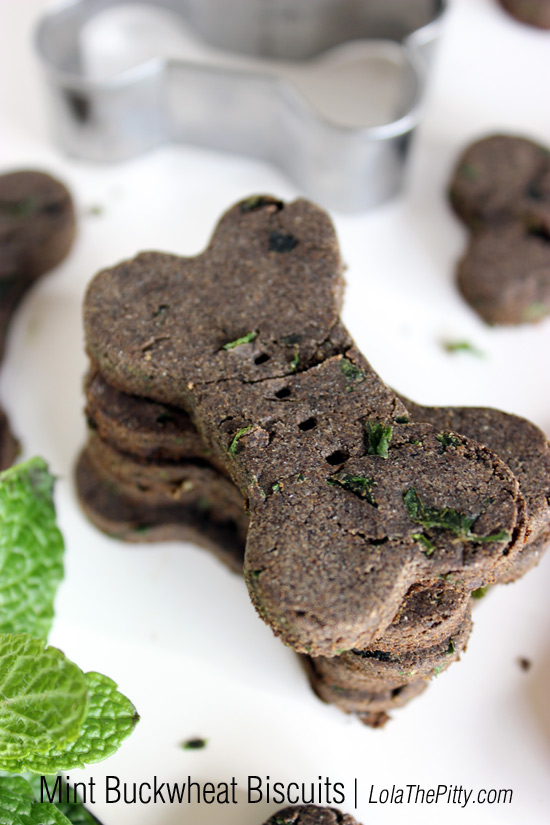
Doggy Mint & Buckwheat Biscuits


Ingredients

1½ cups buckwheat flour
4 Tablespoons fresh parsley, finely chopped
2 Tablespoons fresh mint, finely chopped
1 Tablespoon pure honey
2 Tablespoons olive oil
1 egg, beaten
water (approx. 1-3 tsp)

Recipe makes: 20-24 servings


Instructions

Preheat oven to 400 degrees F.
In a large bowl, stir buckwheat flour, parsley and mint leaves together until combined
In a small bowl, whisk together olive oil and honey.
Pour olive oil-honey mixture into the flour and stir. Add egg and stir until well combined.
Knead dough with hands to thoroughly mix the ingredients together. Add a teaspoon of water at a time to help the dough come together. This should take about 3-5 minutes.
Using a rolling pin, roll the dough out to approx. ¼" thick.
Cut into desired shapes with cookie dough cutter.
Place biscuits onto a nonstick baking sheet and bake for 15 minutes.
Notes
Store biscuits in an airtight container in the fridge to keep fresh.

Monday, 17 August 2015

Dog Games

Follow the Leader

A really fun game I play with my dogs and my puppy classes is follow the leader.

I set up lots of puppy obstacles and traffic cones in no particular order and give each handler the opportunity the chance to be leader. All you need are three dogs and handlers. In the summer I include a shallow wading pool, also some piles of balls or Frisbees. Well, you get the idea.

Find the Treat

I put my dogs on a "down" stay then I put treats in a variety of hiding places. They have to wait until I'm all done hiding them. When I say "GO!" the dog run around trying to each get the most treats. Carol

Go Find

"Go Find" is a more advanced version of the "Find the Treat" game. My very active dog Turbo needed to learn some self control and focus. This game helped him in a fun way. I started with an ordinary game of fetch . As a separate exercise I introduced "stay". Then I put them together. Instead of throwing the ball I would tell him "stay" and I'd drop the ball. If he stayed I told him "Yes" (my "clicker word") and tossed or kicked the ball to make it move and let him get the ball. If he grabbed the ball without permission I would just turn my back for a few seconds and ignore him. Soon he was waiting for the "yes" then diving for the ball. I started tossing the ball a little bit further each time. The toss was gentle and intended to be not exciting ... at least at first.

Over a period of weeks I gradually increased the distance until he was able to wait while I threw the ball as far as I could. Next I would tell him "stay" and instead of throwing the ball I would walk ten or fifteen feet, then drop the ball, and then "yes" release him to get it. Working this to a long distance didn't take long.

Next I dropped the ball behind a log, when he waited for the release "yes" I added the cue "Go Find". Soon I was walking 50 feet or so before dropping the ball behind a log and releasing him and saying "Go Find".

Next I played a trick on him. I only pretended to drop the ball. Instead I walked another ten feet and let the ball drop behind the log when he couldn't see the ball leave my hand. He got to the place he thought I dropped it, didn't find it, but only had to search a little to find it. Sometimes I would actually drop the ball, sometimes I would walk a bit before dropping the ball. Soon he got the idea that he had to actually look for the ball. I walked three, four or five different places either pretending to drop the ball or actually dropping the ball. Since he knew some were a trick he learned to check all the places.

The next stage involved leaving him confined out of sight while I put the balls behind the logs. Then I started putting the balls in a variety of places, not just behind the logs but in the fence next to the log, in a bush, or under a cone. This game has developed much more than these quick instructions.

Hide and Seek

I play hide and seek with my dog. I put him on a sit or down wait. Then I hide. When I am ready I call him. Watch out they sometimes peek. This is good for teaching the dog to wait until called as well as fun for you and your dog. Judy

Fun with Toys

Toys can be used to reduce boredom, exercise the dog, control behavior, and enhance your relationship with your dog. The article "Toys for Bored Dogs" takes a closer look at all of these benefits. It reviews treat dispensing toys, active toys, and traditional interactive games using a toy such as Tug and Fetch.

You Don't Say!, "The Word-Free Teaching and Training Game reveals the art and power of clicker training, and how it feels to be our dogs, in a clever table-top game played between two people."

Tricks (Performance Art) - most dogs think that doing tricks is a kind of game. And if you use clicker training often the dog thinks he's training you. "Let's see ..... if I do this .... I can make her give me a treat!"

Clicker Training
Clicker training is great for teaching tricks as well as agility, obedience and much more

Tuesday, 11 August 2015

Peanut Butter 'FroYo' for Dogs

INGREDIENTS:

1 cup creamy peanut butter, melted
32 ounces plain yogurt

DIRECTIONS:
1. Line two rimmed baking sheets with parchment paper.
2. In a medium bowl, whisk together the melted peanut butter and yogurt until combined and smooth.
3. Using a medium cookie scoop (or 2 tablespoonfuls), drop mounds of the mixture onto the prepared baking sheets. 
4. Place in the freezer until completely frozen, about 1 hour. 
5. Transfer the treats to a freezer-safe container or zip-top bag and store in the freezer for up to 2 months.

Saturday, 8 August 2015

25 Tips For Newly Puppy Owners


1. Get a crate. It makes housetraining incredibly easy.


2. Let your puppy sleep in your bedroom, at least for the first few nights. This whole experience is scary for a pup. Don’t make him/her sleep in the laundry room. Put the crate next to your bed so you can reassure him/her.


3. Baby gates are your friend. Use them to keep the puppy out of places you don’t want him/her to destroy.


4. Supervise, supervise, supervise. If you cannot watch him/her like a hawk, he/she needs to be in his/her crate or in his/her “room,”


5. Set up a puppy room for when you can’t supervise. Pick a small area like the bathroom or kitchen, block it off with baby gates. Add a bed in one corner and pee pads or a dog “toilet” in another.


6. Pick a potty spot. If you don’t want Sparky pooping all over the yard as an adult, pick one area and take him/her directly there when it’s potty time.


7. Set a daily routine. Housetraining proceeds more smoothly if your puppy knows what to expect from her/his day.


8. Enroll in a puppy class. Your pup will learn some basic obedience, but the real benefit of puppy classes is socialization with other puppies and people.


9. Don’t believe everything you read on the internet. Not all advice is good advice. Take everything with a grain of salt. And please, FOR THE LOVE OF GOD, stay away from Yahoo! Answers.


10. Make sure everyone is on the same page. Discuss the puppy rules with your whole family. Figure out who will do what when. Pick one set of training cues and stick with them.


11. Play some puppy training games.


12. Don’t encourage behavior that you’ll regret when he gets big. Jumping up is cute when he/she weighs ten pounds. It won’t be cute when he’s/she's 60 pounds.


13. Get your pup used to handling from day one, touching feet, nails, tail, ears, mouth, teeth, and belly with love. Your vet will thank you.


14. Start grooming early on. For the same reason as above.


15. Let your puppy meet at least two new (friendly and gentle) people every day.


16. Take your puppy to the petstore. Great socialization opportunity. Keep her in the shopping cart and off the floor until she’s had all her puppy shots.


17. Introduce your pup to all kinds of novel things. People in funny hats. Remote control cars. Kids playing. Agility equipment. Balloons. Cats. Car rides.


18. Socialize, don’t traumatize. Introduce new experiences slowly and never let your puppy get overwhelmed.


19. Invite friends and family to meet-the-puppy parties.


20. Frozen wet washclothes and baby carrots make great chews for teething puppies

21. Reward good behavior, don’t wait for bad behavior. Reward the puppy when you see him/her doing something you like. Don’t wait until he’s/she's misbehaving to give him/her attention.


22. Avoid the dog park. In addition to putting your undervaccinated puppy at risk for disease, most dogs at the dog park are quite rude by canine standards. A couple bad experiences could ruin your puppy’s opinion of her own species.


23. Feed 2-3 small meals per day. Don’t leave food out for her to graze on.


24. Pick up anything you don’t want destroyed. If it’s on the floor, it WILL be chewed.


25. Get your puppy microchipped. It’s your best chance at being reunited with your dog if he ever gets lost. You can get this done for around £20 at your vet or local shelter.


Friday, 31 July 2015

Sweet Potato Dog Treats

SWEET POTATO JERKY DOG TREATS


- 1 sweet potato (about ½ pound)

- Heat the oven to 300 degrees.


  • Cut the sweet potato into slices lengthwise about 1/8 inch to ¼ inch thick. 
  • If the pieces are really wide, slice them up the middle so that they cook faster. 
  • Bake on a cookie sheet for 25 minutes, flip them over, and bake for about 25 minutes more. 
  • They should look all shriveled and some pieces should look crispy. 
  • Let them cool and then show your dog , they'll love them.


Makes about 20 treats. Store them in the fridge and they keep for about 2 weeks

Monday, 27 July 2015

Top Training Tips

LISTEN TO YOUR DOG
Learn to listen to your dog. If your dog appears to be uncomfortable meeting another dog, animal or person, don’t insist that he/she say hello. He’s/she's telling you that he/she isn’t comfortable for a reason, and you should respect that. Forcing the issue can often result in bigger problems down the line.

BE GENEROUS WITH YOUR AFFECTION
Most people don’t have a problem being very clear about when they are unhappy with their dogs, but, they often ignore the good stuff. Big mistake! Make sure you give your dog lots of attention when he’s/she's doing the right thing. Let him/her know when he’s been a good boy. That’s the time to be extra generous with your attention and praise. It’s even okay to be a little over the top.

DOES HE/SHE REALLY LIKE IT?
Just because the bag says “a treat all dogs love” doesn’t mean your dog will automatically love it. Some dogs are very selective about what they like to eat. Soft and chewy treats are usually more exciting for your dog than hard and crunchy treats. Keep your eyes open for what he/she enjoys.

TELL HIM/HER WHAT YOU WANT HIM/HER TO DO
There is nothing inherently wrong with telling your dog “no,” except that it doesn’t give him/her enough information. Instead of telling your dog “no,” tell him/her what you want him/her to do. Dogs don’t generalize well, so if your dog jumps up on someone to say hello and you say no, he/she may jump higher or he/she may jump to the left side instead of the right. A better alternative would be to ask him/her to “sit.” Tell him/her what you want him to do in order to avoid confusion.

BE CONSISTENT
Whenever you’re training your dog, it’s important to get as many family members involved as possible so everyone’s on the same page. If you are telling your dog “off” when he/she jumps on the couch and someone else is saying “down,” while someone else is letting him hang out up there, how on earth is he ever going to learn what you want? Consistency will be the key to your success.

HAVE REALISTIC EXPECTATIONS
Changing behavior takes time. You need to have realistic expectations about changing your dog’s behavior as well as how long it will take to change behaviors that you don’t like. Often behaviors which are “normal” doggie behaviors will take the most time such as barking, digging and jumping. You also need to consider how long your dog has rehearsed the behavior. For example, if you didn’t mind that your dog jumped up on people to say hi for the last seven years and now you decide that you don’t want him/her to do that anymore, that behavior will take a much longer time to undo than if you had addressed it when he/she was a pup. Remember it’s never too late to change the behavior some will just take longer than others.

DON’T UNDERESTIMATE THE BENEFITS OF FEEDING A HIGH QUALITY FOOD
Feed your dog a high-quality diet with appropriate amounts of protein. If your dog spends most of his/her days lounging in your condo, don’t feed him/her food with a protein level that is ideal for dogs who herd sheep all day. The money that you will spend on feeding an appropriate quality food will often be money that you save in vet bills later on. I recommend you always check with your veterinarian for the right diet for your dog.

YOU GET WHAT YOU REINFORCE – NOT NECESSARILY WHAT YOU WANT
If your dog exhibits a behavior you don’t like, there is a strong likelihood that it’s something that has been reinforced before. A great example is when your dog brings you a toy and barks to entice you to throw it. You throw the toy. Your dog has just learned that barking gets you to do what he/she wants. You say “no,” and he/she barks even more. Heaven forbid you give in and throw the toy now! Why? Because you will have taught him/her persistence pays off. Before you know it you’ll have a dog that barks and barks every time he wants something. The solution? Ignore his barking or ask him/her to do something for you (like “sit”) before you throw his/her toy.

BRIBERY VS. REWARD
The idea of using treats to train is often equated with bribery. Truthfully, dogs do what works. If using treats gets them to do what you want, then why not? You can also use the world around you as a reinforcement. Every interaction you have with your dog is a learning opportunity, so when you think about it, you probably don’t use food very often except during active training sessions. So why does your dog continue to hang out? Because you reinforce him/her with praise, touch, games and walks. Just remember, the behavior should produce the treat; the treat should not produce the behavior.

FREEDOM
Let your new dog gradually earn freedom throughout your home. A common error that many pet parents make is giving their new dog too much freedom too soon. This can easily lead to accidents relating to housetraining and destructive chewing. So, close off doors to unoccupied rooms and use baby gates to section off parts of the house, if necessary. One of the best ways to minimize incidents is to keep your dog tethered to you in the house and by using a crate or doggie safe area when you can’t actively supervise him/her.


pet finder top ten training tips