Monday, 7 September 2015

Collecting your puppy


As a new puppy or dog owner, you will be aware of the responsibilities that come with dog owning and caring for your dog. However, you will also benefit from the incredibly rewarding and pleasurable experience of dog ownership.

In time, with the correct training and care, your puppy or dog will hopefully become a well-adjusted adult who is a pleasure to own and a credit to you and the dog society at large.

This section includes information for when you first bring your puppy or dog home and provides support and tips on socialisation environment, feeding, walking and much more.


Collecting your new puppy from the breeder

Remember to take:
  • comfortable dog carrier
  • cosy blanket
  • water and food for longer journeys
When you collect your new puppy it will probably be nervous being taken away from its litter and environment for the first time. Here are some tips on how to make your new puppy as relaxed as possible:
  • Try to minimise exposure to loud noises
  • Settle your puppy in a carrier
  • Don't let children or adults handle the puppy too much if it's nervous
  • Keep your puppy well ventilated
  • If the puppy shows signs of distress sit quietly and comfort it
  • Make sure you give your puppy comfort breaks and take spare bedding - puppies are inclined to wee when nervous or excited!
  • Ensure you follow socialisation guidance from the breeder and continue this training for at least a further eight weeks.  Use the Puppy Socialisation Plan for guidance through this period.

Friday, 21 August 2015

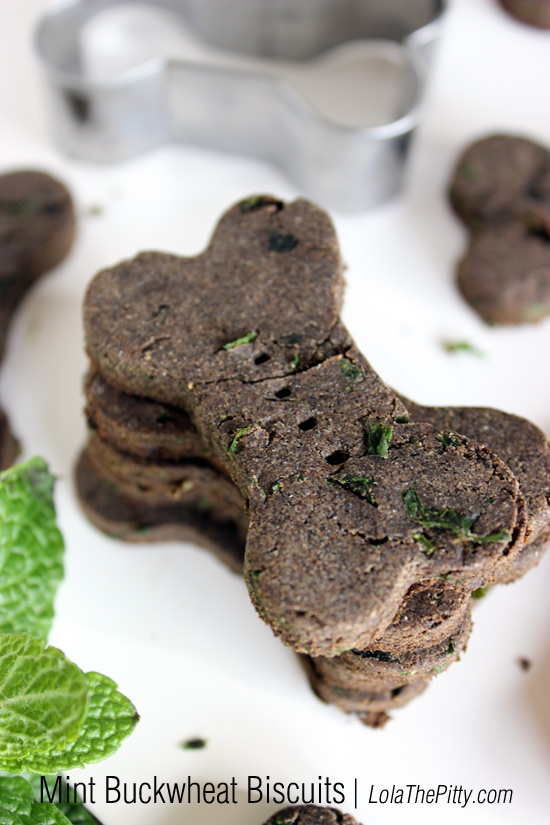
Doggy Mint & Buckwheat Biscuits


Ingredients

1½ cups buckwheat flour
4 Tablespoons fresh parsley, finely chopped
2 Tablespoons fresh mint, finely chopped
1 Tablespoon pure honey
2 Tablespoons olive oil
1 egg, beaten
water (approx. 1-3 tsp)

Recipe makes: 20-24 servings


Instructions

Preheat oven to 400 degrees F.
In a large bowl, stir buckwheat flour, parsley and mint leaves together until combined
In a small bowl, whisk together olive oil and honey.
Pour olive oil-honey mixture into the flour and stir. Add egg and stir until well combined.
Knead dough with hands to thoroughly mix the ingredients together. Add a teaspoon of water at a time to help the dough come together. This should take about 3-5 minutes.
Using a rolling pin, roll the dough out to approx. ¼" thick.
Cut into desired shapes with cookie dough cutter.
Place biscuits onto a nonstick baking sheet and bake for 15 minutes.
Notes
Store biscuits in an airtight container in the fridge to keep fresh.

Monday, 17 August 2015

Dog Games

Follow the Leader

A really fun game I play with my dogs and my puppy classes is follow the leader.

I set up lots of puppy obstacles and traffic cones in no particular order and give each handler the opportunity the chance to be leader. All you need are three dogs and handlers. In the summer I include a shallow wading pool, also some piles of balls or Frisbees. Well, you get the idea.

Find the Treat

I put my dogs on a "down" stay then I put treats in a variety of hiding places. They have to wait until I'm all done hiding them. When I say "GO!" the dog run around trying to each get the most treats. Carol

Go Find

"Go Find" is a more advanced version of the "Find the Treat" game. My very active dog Turbo needed to learn some self control and focus. This game helped him in a fun way. I started with an ordinary game of fetch . As a separate exercise I introduced "stay". Then I put them together. Instead of throwing the ball I would tell him "stay" and I'd drop the ball. If he stayed I told him "Yes" (my "clicker word") and tossed or kicked the ball to make it move and let him get the ball. If he grabbed the ball without permission I would just turn my back for a few seconds and ignore him. Soon he was waiting for the "yes" then diving for the ball. I started tossing the ball a little bit further each time. The toss was gentle and intended to be not exciting ... at least at first.

Over a period of weeks I gradually increased the distance until he was able to wait while I threw the ball as far as I could. Next I would tell him "stay" and instead of throwing the ball I would walk ten or fifteen feet, then drop the ball, and then "yes" release him to get it. Working this to a long distance didn't take long.

Next I dropped the ball behind a log, when he waited for the release "yes" I added the cue "Go Find". Soon I was walking 50 feet or so before dropping the ball behind a log and releasing him and saying "Go Find".

Next I played a trick on him. I only pretended to drop the ball. Instead I walked another ten feet and let the ball drop behind the log when he couldn't see the ball leave my hand. He got to the place he thought I dropped it, didn't find it, but only had to search a little to find it. Sometimes I would actually drop the ball, sometimes I would walk a bit before dropping the ball. Soon he got the idea that he had to actually look for the ball. I walked three, four or five different places either pretending to drop the ball or actually dropping the ball. Since he knew some were a trick he learned to check all the places.

The next stage involved leaving him confined out of sight while I put the balls behind the logs. Then I started putting the balls in a variety of places, not just behind the logs but in the fence next to the log, in a bush, or under a cone. This game has developed much more than these quick instructions.

Hide and Seek

I play hide and seek with my dog. I put him on a sit or down wait. Then I hide. When I am ready I call him. Watch out they sometimes peek. This is good for teaching the dog to wait until called as well as fun for you and your dog. Judy

Fun with Toys

Toys can be used to reduce boredom, exercise the dog, control behavior, and enhance your relationship with your dog. The article "Toys for Bored Dogs" takes a closer look at all of these benefits. It reviews treat dispensing toys, active toys, and traditional interactive games using a toy such as Tug and Fetch.

You Don't Say!, "The Word-Free Teaching and Training Game reveals the art and power of clicker training, and how it feels to be our dogs, in a clever table-top game played between two people."

Tricks (Performance Art) - most dogs think that doing tricks is a kind of game. And if you use clicker training often the dog thinks he's training you. "Let's see ..... if I do this .... I can make her give me a treat!"

Clicker Training
Clicker training is great for teaching tricks as well as agility, obedience and much more

Tuesday, 11 August 2015

Peanut Butter 'FroYo' for Dogs

INGREDIENTS:

1 cup creamy peanut butter, melted
32 ounces plain yogurt

DIRECTIONS:
1. Line two rimmed baking sheets with parchment paper.
2. In a medium bowl, whisk together the melted peanut butter and yogurt until combined and smooth.
3. Using a medium cookie scoop (or 2 tablespoonfuls), drop mounds of the mixture onto the prepared baking sheets. 
4. Place in the freezer until completely frozen, about 1 hour. 
5. Transfer the treats to a freezer-safe container or zip-top bag and store in the freezer for up to 2 months.

Saturday, 8 August 2015

25 Tips For Newly Puppy Owners


1. Get a crate. It makes housetraining incredibly easy.


2. Let your puppy sleep in your bedroom, at least for the first few nights. This whole experience is scary for a pup. Don’t make him/her sleep in the laundry room. Put the crate next to your bed so you can reassure him/her.


3. Baby gates are your friend. Use them to keep the puppy out of places you don’t want him/her to destroy.


4. Supervise, supervise, supervise. If you cannot watch him/her like a hawk, he/she needs to be in his/her crate or in his/her “room,”


5. Set up a puppy room for when you can’t supervise. Pick a small area like the bathroom or kitchen, block it off with baby gates. Add a bed in one corner and pee pads or a dog “toilet” in another.


6. Pick a potty spot. If you don’t want Sparky pooping all over the yard as an adult, pick one area and take him/her directly there when it’s potty time.


7. Set a daily routine. Housetraining proceeds more smoothly if your puppy knows what to expect from her/his day.


8. Enroll in a puppy class. Your pup will learn some basic obedience, but the real benefit of puppy classes is socialization with other puppies and people.


9. Don’t believe everything you read on the internet. Not all advice is good advice. Take everything with a grain of salt. And please, FOR THE LOVE OF GOD, stay away from Yahoo! Answers.


10. Make sure everyone is on the same page. Discuss the puppy rules with your whole family. Figure out who will do what when. Pick one set of training cues and stick with them.


11. Play some puppy training games.


12. Don’t encourage behavior that you’ll regret when he gets big. Jumping up is cute when he/she weighs ten pounds. It won’t be cute when he’s/she's 60 pounds.


13. Get your pup used to handling from day one, touching feet, nails, tail, ears, mouth, teeth, and belly with love. Your vet will thank you.


14. Start grooming early on. For the same reason as above.


15. Let your puppy meet at least two new (friendly and gentle) people every day.


16. Take your puppy to the petstore. Great socialization opportunity. Keep her in the shopping cart and off the floor until she’s had all her puppy shots.


17. Introduce your pup to all kinds of novel things. People in funny hats. Remote control cars. Kids playing. Agility equipment. Balloons. Cats. Car rides.


18. Socialize, don’t traumatize. Introduce new experiences slowly and never let your puppy get overwhelmed.


19. Invite friends and family to meet-the-puppy parties.


20. Frozen wet washclothes and baby carrots make great chews for teething puppies

21. Reward good behavior, don’t wait for bad behavior. Reward the puppy when you see him/her doing something you like. Don’t wait until he’s/she's misbehaving to give him/her attention.


22. Avoid the dog park. In addition to putting your undervaccinated puppy at risk for disease, most dogs at the dog park are quite rude by canine standards. A couple bad experiences could ruin your puppy’s opinion of her own species.


23. Feed 2-3 small meals per day. Don’t leave food out for her to graze on.


24. Pick up anything you don’t want destroyed. If it’s on the floor, it WILL be chewed.


25. Get your puppy microchipped. It’s your best chance at being reunited with your dog if he ever gets lost. You can get this done for around £20 at your vet or local shelter.